
Brown County Court Record Requests
What you need drives where you go. A Chronological Case Summary, called the CCS, is the dated index of court events. The papers behind one entry might be a complaint, motion, exhibit, or order. A certified copy is a clerk-authenticated reproduction of a named record. Have the exact Brown cause number ready when you can. It begins 07C01. That identifies Brown Circuit Court.
Every documented channel is worth using. Indiana MyCase offers a nonconfidential CCS plus links to authorized documents. For a records question, call the Brown County Clerk at 812-988-5510. The first-floor counter serves visitors from 8:00 a.m. to 4:00 p.m. on weekdays, and mailed requests go to P.O. Box 85, Nashville, IN 47448. The published fax number is 812-988-5562. Confirm the office will accept a faxed request. No general records email, guaranteed public terminal, or online certified-copy cart is published.
- Identify the cause number, case type, and exact record or event date.
- Check MyCase and its document-access table for a public link.
- Ask the Clerk for inspection or a plain copy when no link appears.
- State whether the copy must be certified and ask for the current charge.
- Use the Circuit Court reporter channel for a transcript or hearing audio.
Three Brown County Record Layers
Many failed docket requests trace back to mixing up the CCS with the case file. As a case-finding tool, MyCase is strong. It shows the case header, the status, parties where public, and the dated CCS events. The linked-file layer varies by case type. Some civil matters expose nonconfidential orders and other papers, while public felony and misdemeanor access generally stops at sentencing orders. A missing link never proves a paper was lost.
| Layer | What it supplies | Best Brown route |
|---|---|---|
| CCS or docket | A dated index of filings, settings, rulings, and disposition events | MyCase, then Brown Clerk |
| Filed document | The actual motion, order, judgment, petition, or exhibit | Linked public file or a specific clerk request |
| Certified copy | A clerk-authenticated copy of the chosen record | Brown Clerk after fee confirmation |
The official MyCase document table shows why online access changes by case type.
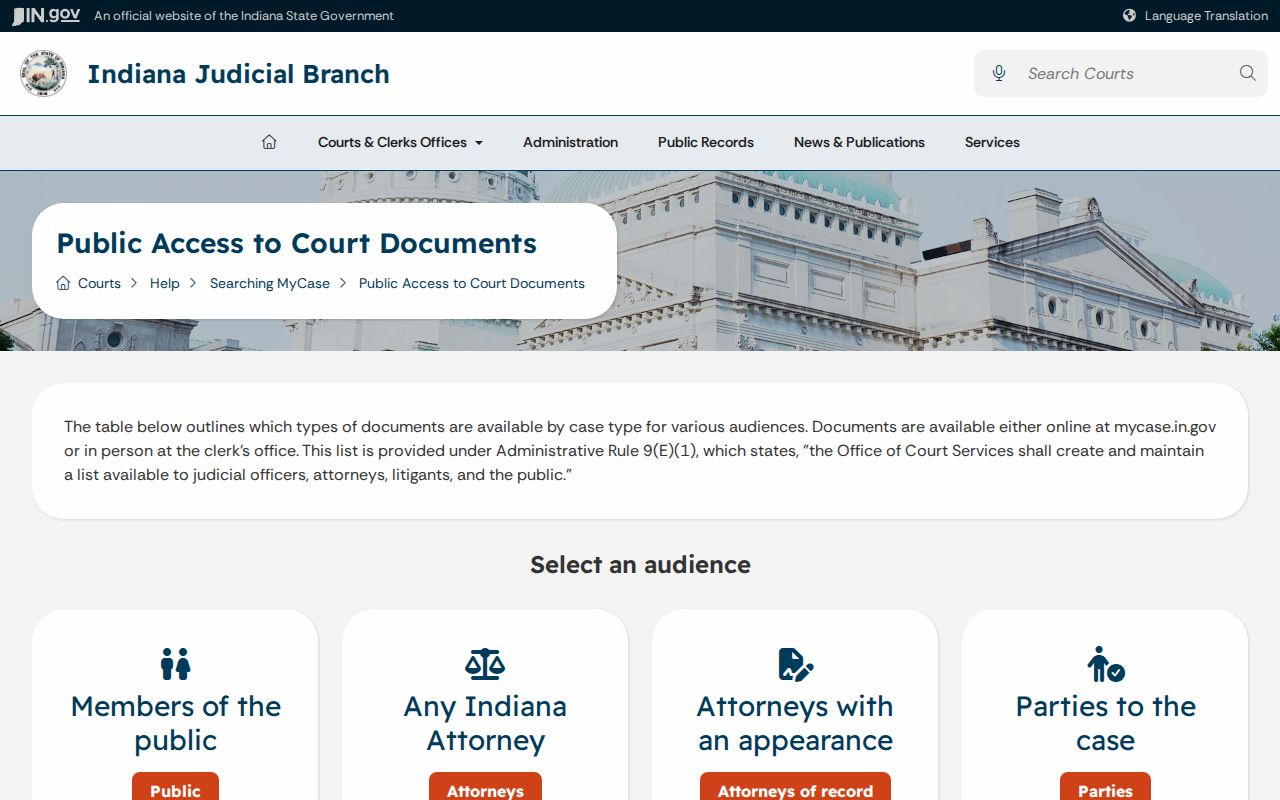
That table should be checked before treating an absent download as an absent record.
Kinds of Court Records
One unified Brown County Clerk keeps records for the single Brown Circuit Court. Civil, criminal, infraction, small-claims, domestic-relations, estate, guardianship, juvenile, and protection-order matters all sit in that one office. So do related court-finance matters. Access is not equal across categories. Ask at the same clerk counter which nonconfidential part can be inspected.
- Chronological Case Summaries and case headers
- Complaints, answers, motions, notices, and exhibits where public
- Signed orders, judgments, and sentencing orders
- Small-claims, eviction, estate, and guardianship filings where accessible
- Transcripts or audio obtained through their separate court request routes
The Indiana public-access handbook gives statewide context for these distinctions.
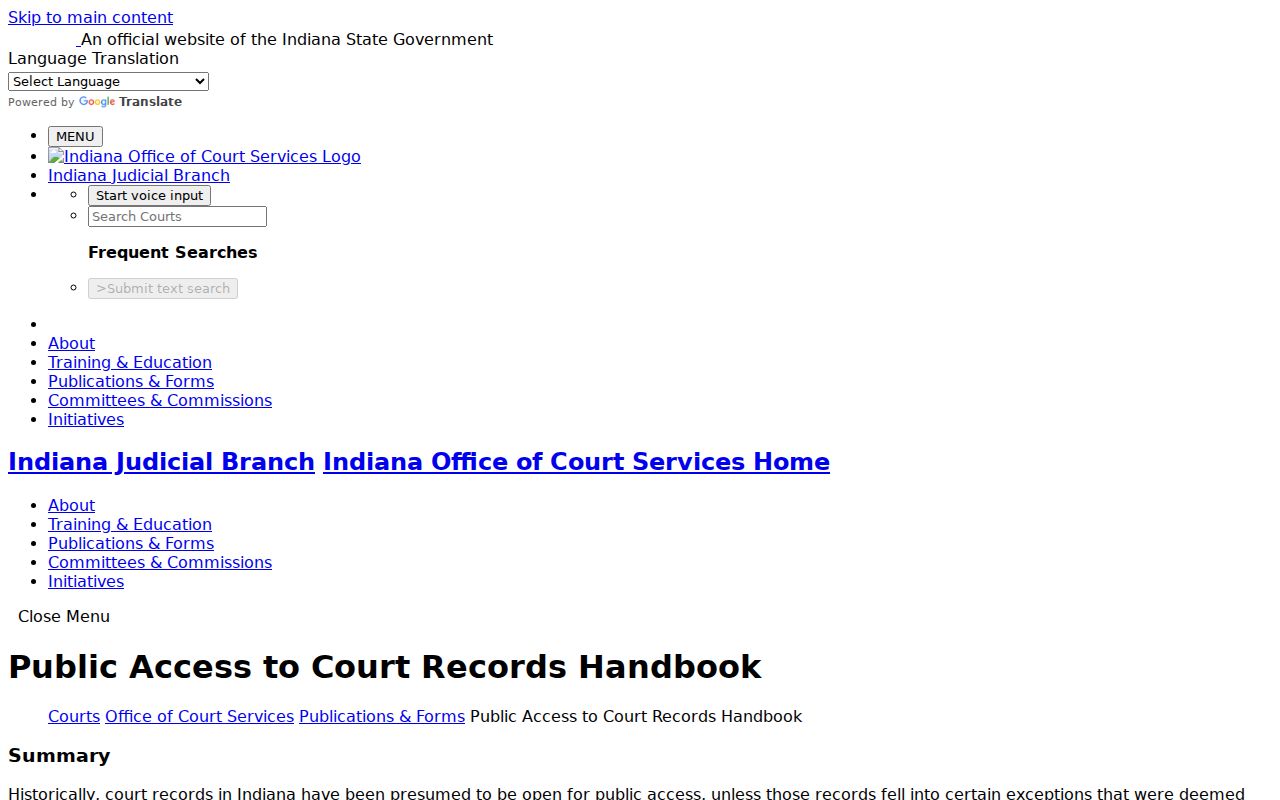
Every Brown request still goes to the office holding the original Brown Circuit Court file.
Brown County Paper and Audio Records
Hearing-based records and older files need extra care. Brown Circuit Court joined Odyssey on December 7, 2020, so an earlier record may lack a complete digital image set. Ask the Clerk about the official file. It may sit on paper, in storage, or in some other format. The Indiana State Library lists Brown Circuit Court holdings from 1836 through 1945. It also notes the 1873 courthouse fire. That does not put every original case file at the library.
A transcript comes from the hearing record, and it is not a certified CCS. Contact the Circuit Court for the reporter or transcription route. Brown local rules also spell out a written audio request. It must name the cause number and hearing date. It must give the requester's name, address, and phone. A new portable flash drive in its original package goes with it. No official Brown source quotes an audio, transcript, deposit, or turnaround figure. Recording, changing, or rebroadcasting court audio is restricted.
Court Records: What They Contain
A public record can mix identification fields with the chronological history. It also links the court papers. Read the dates closely. An entry date marks when the clerk placed an event on the CCS. An order may carry a different signature date. The full cause number encodes county, court, filing year and month, case type, and sequence.
| Cause number | 07C01-YYMM-TYPE-SEQUENCE identifies Brown Circuit Court and the filing. |
|---|---|
| Case header | Court, case type, caption, filing date, and public status fields. |
| CCS events | Filings, service, appearances, hearings, continuances, orders, judgment, and disposition. |
| Filed papers | Complaints, motions, responses, exhibits, notices, and other available documents. |
| Orders | Signed rulings, judgments, or sentencing orders when public. |
A docket search result still helps even with no PDF attached. Hand the clerk the event date and title so the request stays narrow and clear.
Brown County Clerk Record Counter
The official county page names Pearletta Banks. She is the current elected Clerk of the Brown Circuit Court. This office is the constitutional record keeper for Brown County's court of record. Its first-floor location matters. The Circuit Court itself sits on the courthouse second floor. So records and copy questions start at the clerk counter, while courtroom and transcript questions may need the court upstairs.
Brown County Clerk’s Office
20 E Main Street, First Floor
Nashville, IN 47448
Mail: P.O. Box 85
812-988-5510
Bring the cause number and a description of the document. Staff can explain procedure and general case-file information, but they cannot interpret the law, pick a filing, or build a custom narrative report.
Copy Fees and Certification
A plain copy reproduces the filing you ask for. A certified copy adds the clerk's authentication. Brown County publishes a $1-per-page charge for requested copies of filings, but no separate certification, exemplification, rush, record-search, transcript, or audio fee is published. Confirm both price and payment method before you mail any funds.
| Record | Known charge or status |
|---|---|
| MyCase search | Free anonymous public search |
| Authorized online document | No ordinary remote-access fee stated |
| Plain requested filing copy | $1 per page |
| Certified or exemplified copy | Current fee must be confirmed |
| Transcript or hearing audio | Quote and procedure must be confirmed |
The copy price is not a new-case filing fee. No guaranteed mailing procedure or completion time is posted, so ask the office directly how to pay and how copies come back.
Indiana Rules for Brown Records
Indiana's own rules govern who may see Brown Circuit Court files. Rule 4 starts from the opposite of secrecy. Records are open unless another rule closes them. Rule 5 then shields certain case types. It also shields certain papers and data from that presumption. Remote access, fees, and bulk or compiled court information fall under Administrative Rule 9. Each rule speaks in its own words. The Rule 4 text lays out the presumption of access on the Indiana courts site.
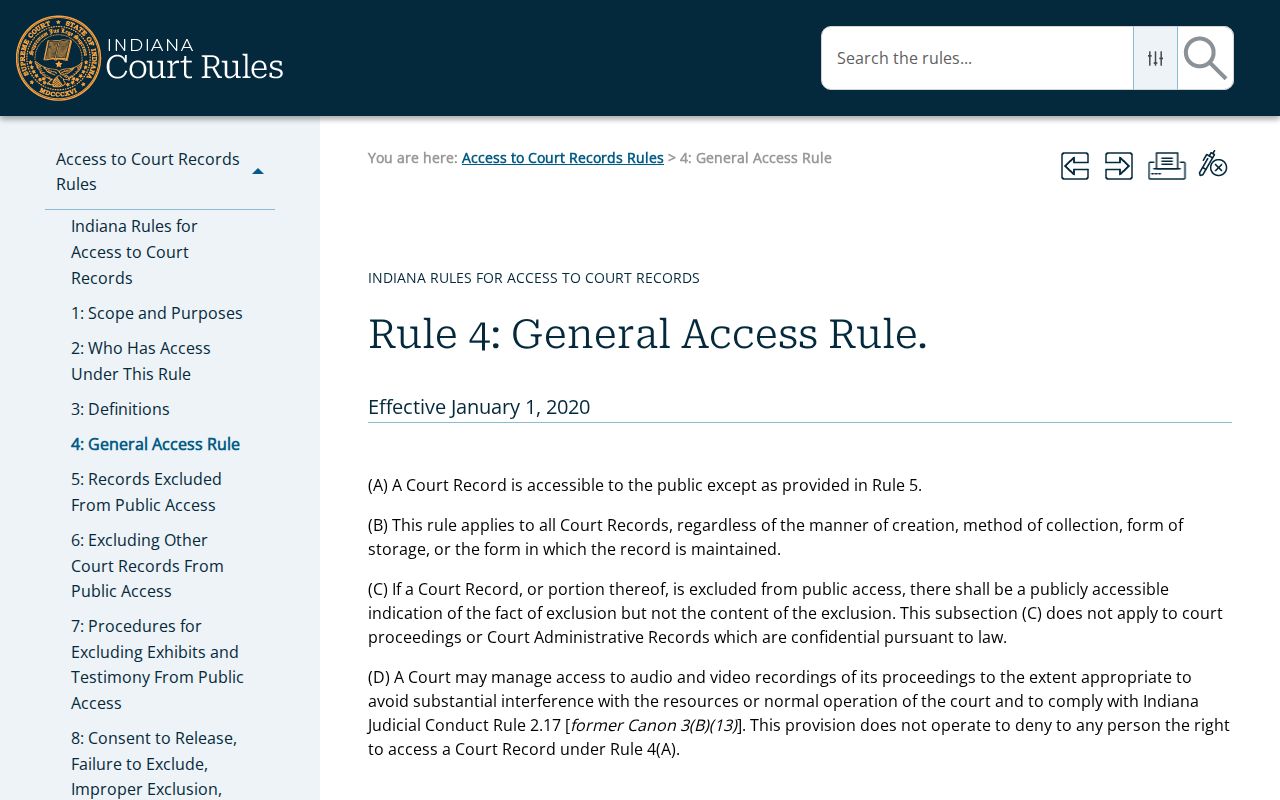
The rule reaches paper and electronic formats alike. Protected portions stay closed either way. The Administrative Rule 9 text spells out how remote records and fees work.
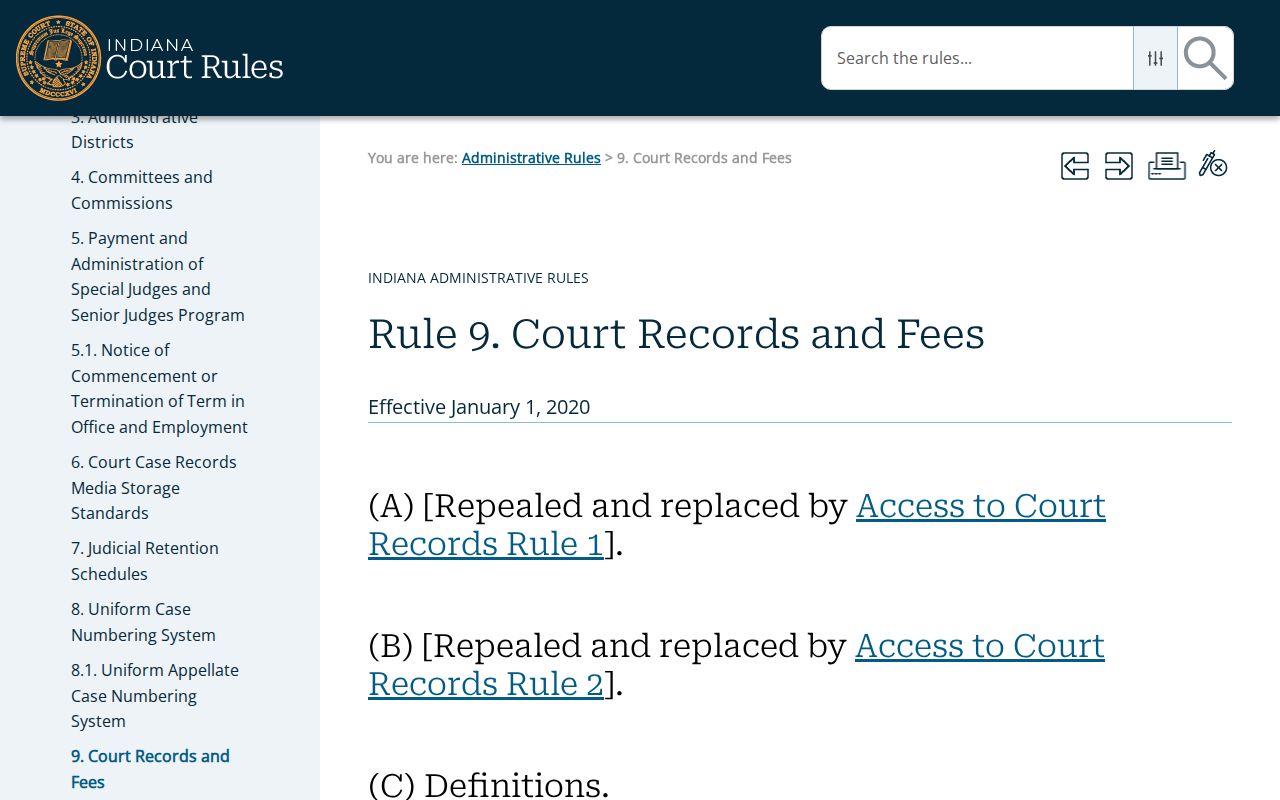
Want bulk or compiled data? That request may not become a custom local report. Instead, it can be routed to the Office of Judicial Administration.
Brown County Restricted Court Records
Some records stay closed to the public. Adoption files, most juvenile matters, mental-health proceedings, protected termination cases, and sealed filings fall outside an ordinary Brown County court docket search. Identifying details in protection-order cases take a separate protected path too. Seeing a case header in the docket does not mean every document inside is open to you, and a search that returns nothing does not mean no case exists.
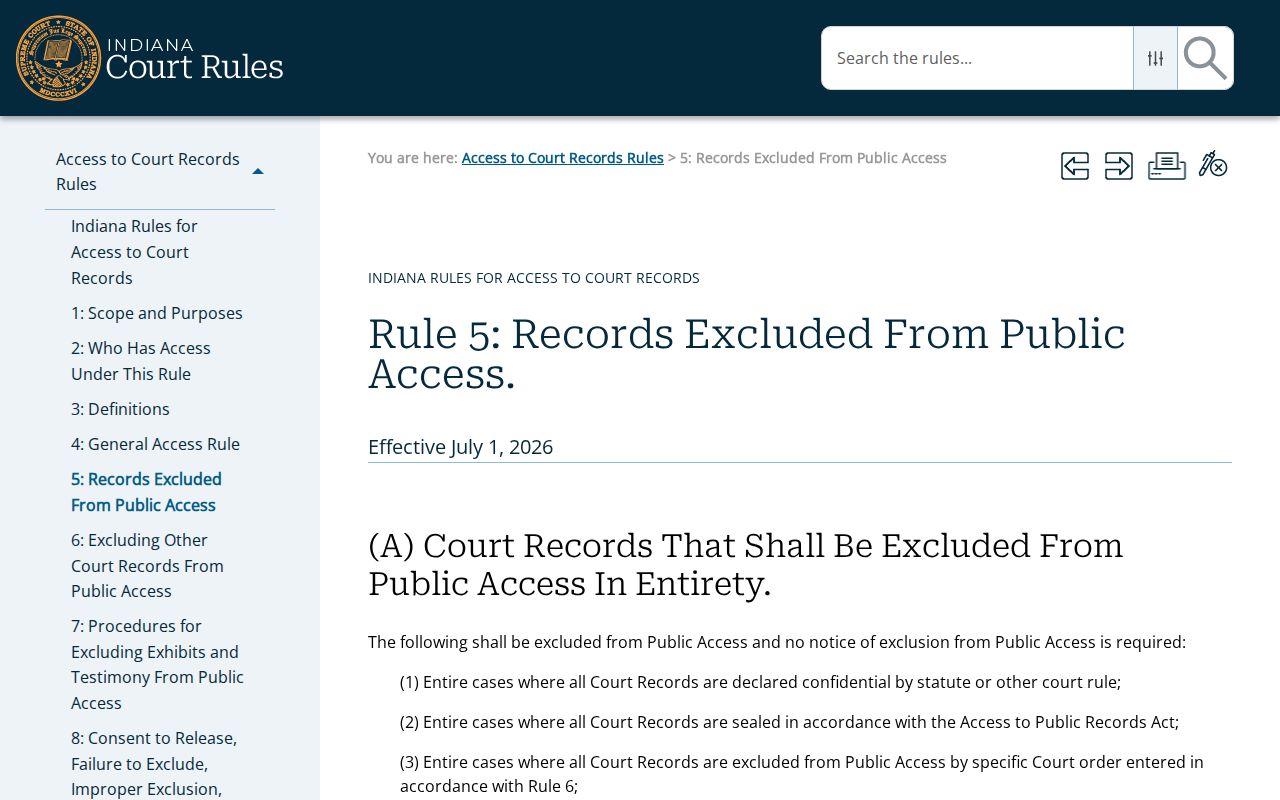
The Rule 5 exclusions list what the courts withhold from public access.
Counter requests: the clerk cannot waive a seal or confidentiality rule just because you asked in person.
Access Rules for Court Records
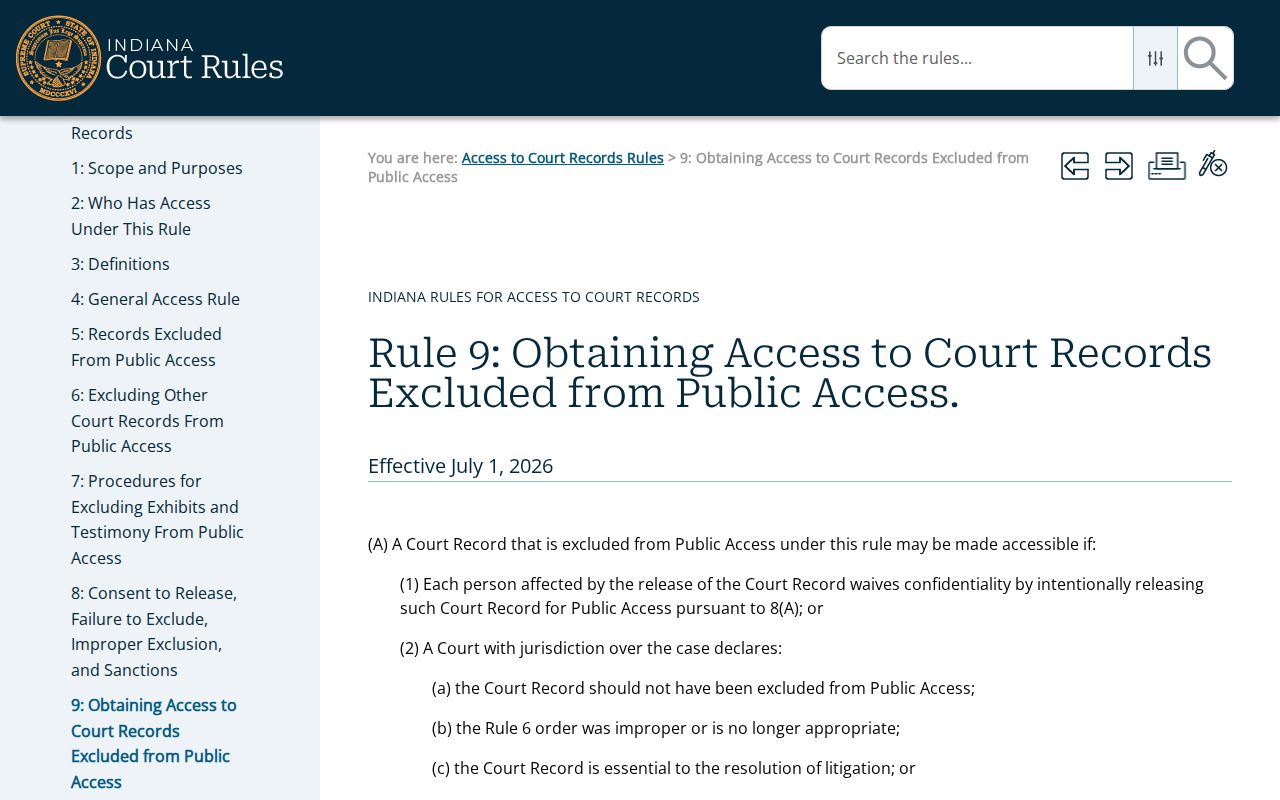
Start by sorting out what the problem actually is. Is a document link broken? Is the file an older paper one? Or is the record legally excluded? Ask the Clerk about inspecting any nonconfidential part. If the answer is no because the record is excluded, Indiana Rule 9 offers a court process for extraordinary access. It takes a verified written request. You must show extraordinary circumstances and public interest. You must also address harm and prejudice, and, in most cases, give notice and get a court decision. The extraordinary-access rule makes clear this is a formal judicial request, not a quick favor.
It never licenses staff to sidestep a restriction or share protected details informally.
Key access rule: Indiana Access to Court Records Rule 4 favors access, Rule 5 lists exclusions, and Rule 9 governs extraordinary requests for excluded material.